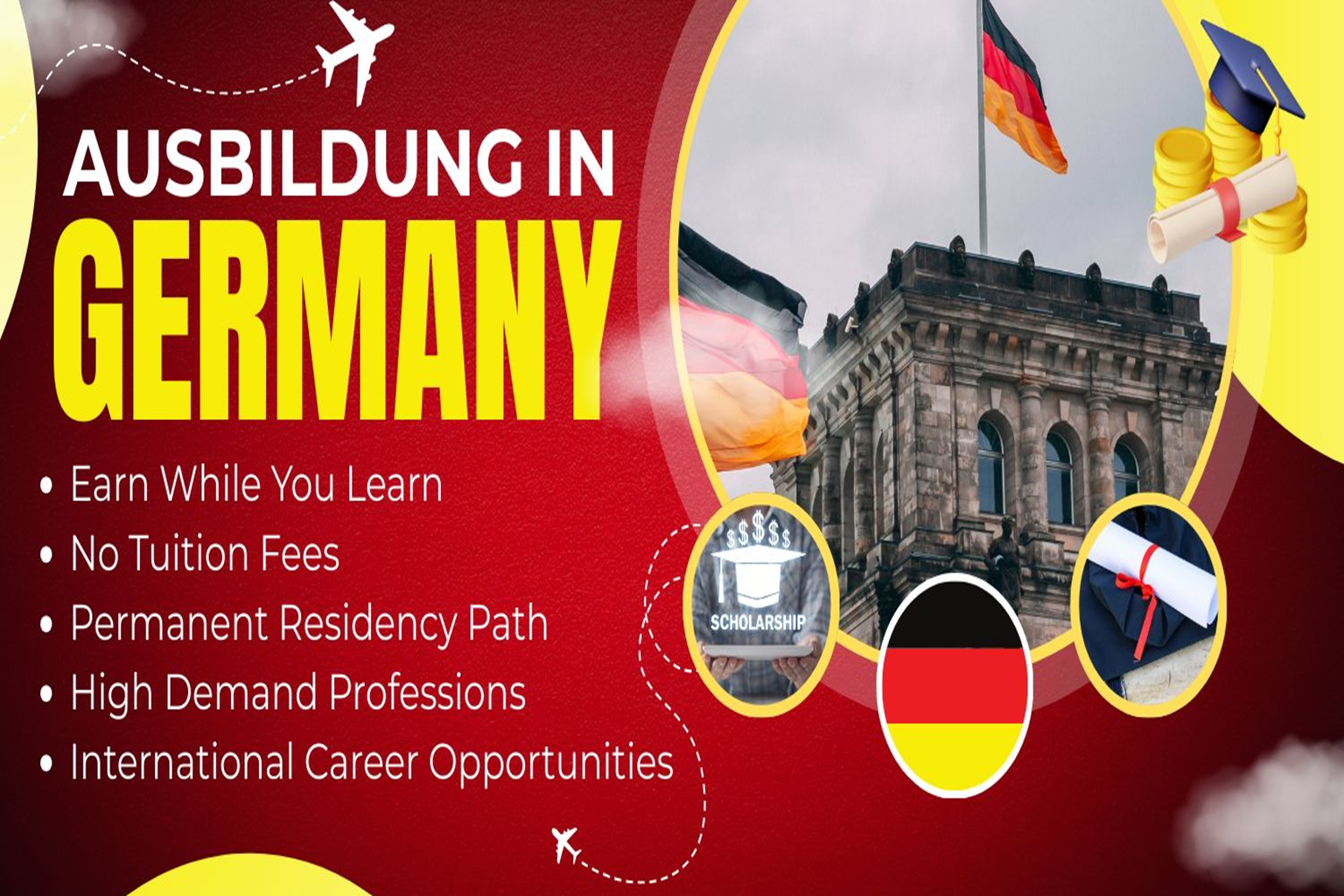
Ausbildung in Germany (vocational training) is one of the most practical and financially sound pathways for international students wanting to earn while you learn, gain real work experience, and qualify for long-term employment. Below is an updated guide to the most popular and high-paying Ausbildung courses, what they require, and what salaries you can expect during and after training for the 2026–2027 intake.
Table of Contents
Toggle🎯 What Is Ausbildung in Germany?
Ausbildung (dual vocational training) is a structured apprenticeship where you:
- Work at a company (3–4 days/week)
- Attend vocational school (Berufsschule) (1–2 days/week)
- Earn a monthly stipend during training
- Get a state-recognized qualification at the end 🛠️
Training durations usually range 2–3.5 years depending on the profession.
🧑🎓 Top Ausbildung Courses (High Demand & Career Prospects)
Below are some of the most sought-after courses in Germany for international trainees, with requirements and salary estimates:
1. IT Specialist – Fachinformatiker/in
Focus: Software development, system integration, IT support
Duration: ~3 years
Training stipend: €1,000 – €1,600/month
Post-Ausbildung salary: €3,200 – €4,000+/month
Why: Huge demand in tech, strong growth, employable skills.
2. Nursing Professional – Pflegefachkraft
Focus: Healthcare & patient care
Duration: ~3 years
Training stipend: €1,100 – €1,600/month
Post-Ausbildung salary: €3,000 – €3,800+/month
Why: Very high demand due to Germany’s aging population and stable career path.
3. Mechatronics Technician – Mechatroniker/in
Focus: Mechatronics (mechanics + electronics + IT)
Duration: ~3.5 years
Training stipend: €1,000 – €1,350/month
Post-Ausbildung salary: €3,200 – €4,000+/month
Why: Strong demand in automotive, robotics, and automation.
4. Industrial Mechanic – Industriemechaniker/in
Focus: Machinery operation & maintenance
Duration: ~3.5 years
Training stipend: €1,000 – €1,400/month
Post-Ausbildung salary: €3,000 – €3,800+/month
Why: Useful in manufacturing and production industries.
5. Electronics Technician – Elektroniker/in
Focus: Electrical systems, energy tech
Duration: ~3 – 3.5 years
Training stipend: €900 – €1,600/month
Post-Ausbildung salary: €3,000 – €3,600+/month
Why: Essential role in energy, automation, and infrastructure.
6. Banking Specialist – Bankkaufmann/-frau
Focus: Finance, banking services
Duration: ~2.5–3 years
Training stipend: ~€1,050 – €1,550/month
Post-Ausbildung salary: €3,000 – €3,800/month
Why: Great for business-savvy candidates seeking finance roles.
7. Hotel & Hospitality Specialist – Hotelfachmann/-frau
Focus: Hotel management & tourism
Duration: ~3 years
Training stipend: ~€850 – €1,300/month
Post-Ausbildung salary: ~€2,100 – €2,800/month
Why: Good for service industry careers, especially in big cities or tourist hubs.
8. Logistics & Supply Chain – Kaufmann/-frau für Spedition und Logistikdienstleistung
Focus: Freight, supply chain, e-commerce logistics
Duration: ~3 years
Training stipend: ~€1,000 – €1,350/month
Post-Ausbildung salary: Stable career with global logistics firms.
📜 Typical Requirements
To enroll in an Ausbildung in Germany, most international applicants need:
Educational Requirements
- Secondary school certificate (equivalent of 10th/12th grade)
- Specific subjects may matter for technical or healthcare programs.
Language
- German language skills (B1–B2) are usually required because most training and work communication is in German.
Some companies may accept lower levels initially with support, but aiming for B2 increases opportunities.
Training Contract
- You must secure a training contract (Ausbildungsvertrag) with a German company before starting the visa process.
Other
- Clean criminal record
- Health certificate as required.
💶 Salary Overview
During Ausbildung (Stipend)
- Generally between €900–€1,600/month depending on field and year of training.
After Completion (Entry Salary)
Many trained professionals earn between €2,800–€4,500+ per month in the first job after Ausbildung, especially in technical and IT fields.
📈 Why These Courses Are Great for International Students
📌 Job Security
Germany has a strong demand for skilled workers, especially in healthcare, IT, Engineering, and logistics.
📌 Earn While You Learn
You receive a monthly stipend from day one of your training.
📌 Post-Training Work Opportunities
After graduating, many companies hire apprentices permanently with lucrative salaries.
📌 Permanent Residency Path
Successful graduates often qualify for extended residence permits and can transition to work visas.
💡 Tips for International Applicants
- Start learning German early (B1–B2): Essential for communication and applications.
- Apply widely to companies: More applications = higher chances of securing a contract.
- Research high-demand sectors like healthcare and IT for best career opportunities.
❓ FAQs
Is Ausbildung paid in Germany?
✔ Yes — trainees earn a monthly stipend that increases each year of training.
Do I need German language skills?
✔ Yes — most programs require at least B1/ B2 German.
Can I stay in Germany after Ausbildung?
✔ Yes — graduates can seek employment related to their training and apply for a work permit or longer residency.
How long do Ausbildung courses take?
✔ Typically 2–3.5 years depending on the field.